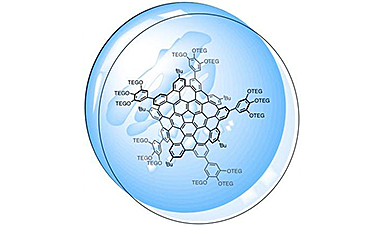
Flexible warped nanographene developed for bioimaging

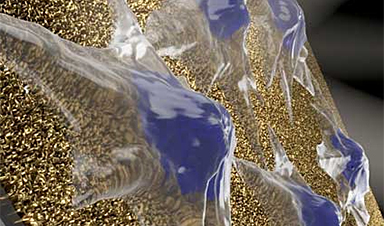
An international team of scientists has developed a water-soluble "warped nanographene", a flexible molecule that is biocompatible and shows promise for fluorescent cell imaging. The new nanographene molecule also induces cell death when exposed to blue laser light. Further investigation is required to determine how nanocarbons could be used for a range of biological applications, [...]
By |2018-03-22T14:31:28+00:00February 28th, 2018|Categories: News|0 Comments

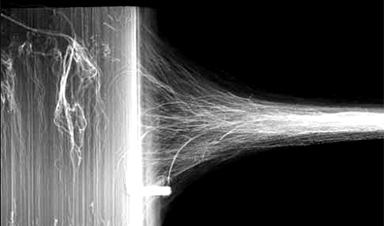
Carbon nanotube yarn taps nerves for electroceutical treatments and diagnostics

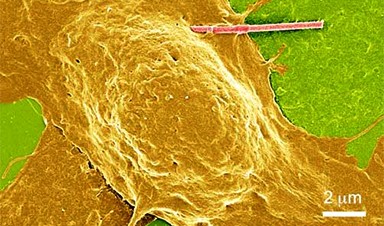
Ingested or injected pharmaceuticals can target specific molecules involved in disease processes, but get distributed throughout the body where they can cause unwanted side effects. An approach known as electroceuticals aims to avoid systemic exposure by using small wires to electrically monitor and manipulate individual nerves that control organ function and carry information about disease. [...]

By |2018-03-22T14:31:28+00:00February 27th, 2018|Categories: News|0 Comments

Researchers combine metalens with an artificial muscle (w/video)

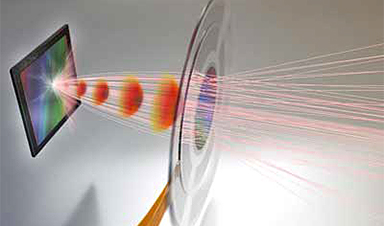
Inspired by the human eye, researchers at the Harvard John A. Paulson School of Engineering and Applied Sciences (SEAS) have developed an adaptive metalens, that is essentially a flat, electronically controlled artificial eye. The adaptive metalens simultaneously controls for three of the major contributors to blurry images: focus, astigmatism, and image shift. The research is [...]

By |2018-03-22T14:31:28+00:00February 27th, 2018|Categories: News|0 Comments

Nanomushroom sensors: One material, many applications

A small rectangle of pink glass, about the size of a postage stamp, sits on Professor Amy Shen's desk. Despite its outwardly modest appearance, this little glass slide has the potential to revolutionize a wide range of processes, from monitoring food quality to diagnosing diseases. The slide is made of a 'nanoplasmonic' material -- its [...]

By |2018-03-22T14:31:29+00:00February 26th, 2018|Categories: News|0 Comments

Biodegradable Bandage Based on Nanofibers

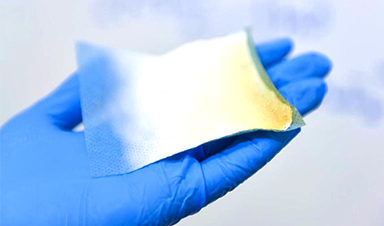
For the very first time in Russia, researchers from NUST MISIS have developed a novel therapeutic material based on nanofibers. The nanofibers are composed of polycaprolactone altered with plasma components of human blood and a thin-film antibacterial composition. The living biodegradable bandages developed from these nanofibers will speed up the growth of tissue cells by [...]

By |2018-03-22T14:31:29+00:00February 24th, 2018|Categories: News|0 Comments

Tiny, light-powered wires to modulate brain’s electrical signals

The human brain largely remains a black box: How the network of fast-moving electrical signals turns into thought, movement and disease remains poorly understood. But it is electrical, so it can be hacked—the question is finding a precise, easy way to manipulate electrical signaling between neurons. A new University of Chicago study shows how tiny, [...]

By |2018-03-22T14:31:45+00:00February 23rd, 2018|Categories: News|0 Comments

A nanowire array to screen drugs for neurodegenerative diseases

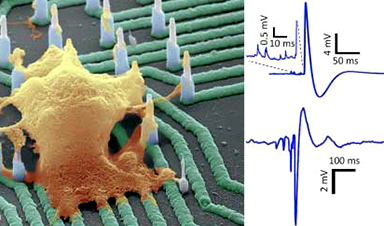
Using resources at the Center for Integrated Nanotechnologies (CINT), a team built tiny wires that can record the electrical activity of neurons in fine detail (Nano Letters, "High density individually addressable nanowire arrays record intracellular activity from primary rodent and human stem cell derived neurons"). The small-diameter wires penetrated the neuron cells. Once inside, the [...]

By |2018-03-22T14:31:46+00:00February 22nd, 2018|Categories: News|0 Comments

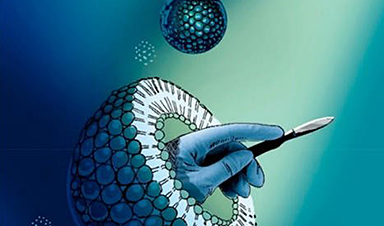
Nanoparticles act as surgical blades for improved dental surgery

Currently, more than 80 nanotechnologies have been approved for a variety of medical applications, from treating cancer to bioimaging to tissue remodeling. Now in a new study, researchers have shown that enzyme-containing nanoparticles can perform minor dental surgery and improve the outcome of dental braces for reorienting severely misaligned teeth into their proper position. Tests [...]

By |2018-03-22T14:31:47+00:00February 21st, 2018|Categories: News|0 Comments

A synthetic cell that produces anti-cancer drugs within a tumor

Technion-Israel Institute of Technology researchers have successfully treated a cancerous tumor using a "nano-factory" – a synthetic cell that produces anti-cancer proteins within the tumor tissue. The research, which was published in Advanced Healthcare Materials, combines synthetic biology, to artificially produce proteins, and targeted drug delivery, to direct the synthetic cell to abnormal tissues. The [...]

By |2018-03-22T14:31:49+00:00February 20th, 2018|Categories: News|0 Comments

Long-Term Delivery of Nanomedicines

A good deal of the field of nanomedicine is focused on delivering drugs to specific sites within the body, such as specific organs or cancer tumors. While many nanomedicines have well developed targeting mechanisms, they often are best delivered a small amount at a time. Yet, continuous slow-release of nanomedicines has typically required the use [...]

By |2018-03-22T14:31:51+00:00February 19th, 2018|Categories: News|0 Comments
Go to Top